Wall art can change the character of a room quickly, but choosing it well involves more than finding an image you like. Scale, placement, color, furniture, and empty wall space all influence whether a piece feels intentional or out of place. People who want to Buy Luxury Wall Art Online often face many options, making a simple selection process useful. The goal is not to fill every wall, but to choose artwork that supports the room’s proportions and creates a clear visual focus.
Start with the Wall, Not the Artwork
Before browsing styles, measure the wall where the artwork will go. A piece that looks substantial online can feel surprisingly small above a wide sofa, bed, or dining console.
Consider both the wall dimensions and the furniture below it. Artwork above a large piece of furniture usually looks more balanced when it occupies a meaningful portion of the available width rather than floating as a small accent.
If the wall is narrow, a vertical piece may work better than a wide horizontal composition. Large open walls may suit a single oversized artwork or a carefully planned group.
Use Furniture to Guide Placement
Furniture provides useful visual boundaries. Above a sofa, headboard, sideboard, or console, the artwork should feel connected to the piece below rather than isolated.
Avoid hanging art so high that it seems detached from the room. At the same time, leave enough breathing room so the furniture and artwork do not feel crowded.
For gallery walls, lay the arrangement out on the floor first. This makes it easier to test spacing and balance before putting multiple holes in the wall.
Decide Whether You Want Contrast or Continuity
Artwork can either blend with the existing palette or create deliberate contrast. Both approaches can work.
A room with muted furnishings may benefit from a stronger graphic piece, while a colorful room may feel calmer with neutral artwork. Texture matters too. Metal, canvas, framed prints, and sculptural pieces can each change how the surface interacts with light.
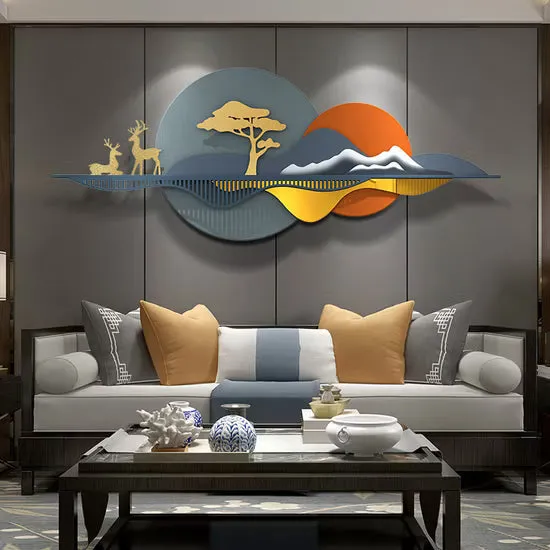
When exploring Modern Design Luxury Wall Art, think about the relationship between the artwork and the room rather than treating “modern” as one fixed look. Minimalist line work, geometric forms, abstract color, and dimensional pieces can all feel modern in different settings.
Choose a Focal Point Before Adding More
One of the easiest ways to make a room feel cluttered is to give every wall equal visual weight. A stronger approach is to decide which wall should attract attention first.
In a living room, this may be the wall behind the sofa. In a bedroom, it may be the headboard wall. Dining rooms often benefit from artwork that anchors the table visually.
Once the main focal area is established, secondary walls can use smaller or quieter pieces. This creates hierarchy and helps the room feel considered rather than overdecorated.
Think About Viewing Distance
Artwork should be judged from where people will usually see it. A small detailed piece may work well in a hallway where viewers pass close by, but it can disappear across a large living room.
Bold shapes and larger compositions usually read more clearly from a distance. Fine detail is better appreciated where people can stand nearer.
This is another reason measurements matter when shopping online. Product dimensions are more useful than judging scale from styled photographs alone.
Avoid Matching Every Color Exactly
Trying to match artwork perfectly to cushions, rugs, and curtains can make the room feel overly coordinated. Instead, look for one or two colors that relate to the space while allowing the artwork to introduce something new.
A piece can repeat a warm wood tone, echo an accent color, or simply complement the overall mood. The connection does not need to be literal.
This creates a layered interior that feels collected over time rather than assembled from a matching set.
Leave Room for the Space to Change
Furniture, textiles, and accessories often change more frequently than wall art. Choosing pieces that work with several colors or styles can make future updates easier.
Neutral frames, versatile materials, and artwork with a balanced palette may adapt well when a room is refreshed.
Conclusion
Choosing wall art successfully is mostly about proportion, placement, and visual balance. Measuring the wall, considering the furniture below it, deciding where the focal point should be, and thinking about viewing distance can prevent common mistakes.
The best piece is not necessarily the largest, boldest, or most expensive. It is the one that feels appropriate for the room and gives the surrounding furniture and architecture enough space to work with it. A thoughtful approach can make online art shopping easier and help a room feel finished without becoming crowded.