A facility manager looks at a worn floor and wonders whether a quick refresh will do. In busy workplaces, the answer is usually no, because forklifts, foot traffic, and spills punish surfaces relentlessly. Commercial epoxy flooring offers a tougher, longer-lasting route, yet it only pays off when the choice is made for the right reasons. The points below follow the questions owners raise most. Here is how to think about it from a business perspective.
The Hidden Cost of a Failing Floor
A damaged floor drains money in quiet ways. Cracks catch wheels and slow movement, rough patches wear out equipment, and standing moisture becomes a slip hazard. None of these problems appear as a single big expense, which is why owners often underestimate how much a poor surface costs over a year. Tracking them is a useful first step.
Insurance and compliance add pressure. Slip incidents lead to claims, and inspectors in food, healthcare, and manufacturing settings expect cleanable, intact surfaces. A seamless, sealed floor helps meet those expectations, because there are far fewer seams where dirt and bacteria can hide. Prevention is almost always cheaper than dealing with an accident afterward.
Why Paint Falls Short
Standard concrete floor paint looks affordable on the shelf, and it can freshen a lightly used storeroom. Under heavy traffic, though, it is a thin film that scuffs, lifts, and peels, particularly where tires turn or chemicals splash. Repainting every season quickly erases the savings, and each cycle interrupts operations again. Only light-duty areas remain a fair fit for it.
A properly installed resin system behaves differently because it bonds into prepared concrete and builds real thickness. That depth absorbs impact, resists abrasion, and blocks many common liquids from reaching the slab. The result is a surface designed for work rather than for appearance alone, and it keeps performing long after paint would have failed.
Safety, Hygiene, and Workflow
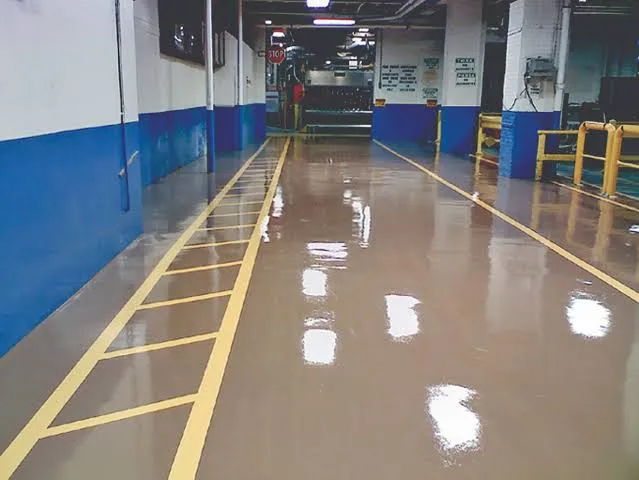
Safety features can be built right into the surface. Fine aggregate or textured additives improve traction in wet zones, while color-coded areas mark walkways, machinery bays, and loading points. These visual cues keep people where they should be and reduce confusion in fast-moving environments. Clear markings also support routine safety audits, and a well-planned layout can improve workflow noticeably.
Hygiene benefits are equally practical. A smooth, non-porous surface is easy to wash, and coved edges where the floor meets the wall remove corners that collect grime. Kitchens, clinics, and food-handling areas rely on these details to keep cleaning routines short and consistent, which saves both labor hours and supplies. Cleaner floors also leave a better impression on visitors.
Planning Installation Around Operations
Downtime is the concern managers raise first. Experienced crews phase the work, often tackling one zone at a time or working evenings and weekends so the business keeps moving. Clear communication about access, ventilation, and cure times helps staff plan deliveries and shifts without nasty surprises. A written schedule keeps everyone accountable from day one.
Surface preparation again deserves attention. Grinding or shot blasting creates the profile needed for adhesion, and moisture testing confirms the slab is ready. Skipping these checks to save a day is a false economy, since failures usually show up after the crew has left and the warranty questions begin. Insist on seeing the prep plan in writing.
Measuring Return on Investment
Return on investment comes from several directions at once. Fewer repairs, lower cleaning costs, reduced accident risk, and a more professional appearance all contribute. Add them together over a decade or more and the higher initial price often looks modest compared with repeated patching and repainting. A simple spreadsheet comparing both paths can make this obvious.
Choosing a qualified installer protects that return. Ask for examples of similar projects, confirm the products are suited to your industry, and check what the warranty actually covers. The cheapest bid rarely includes the preparation and quality control that make a floor last, so compare scope rather than just totals.
Conclusion
A business floor is a working asset, and it deserves the same planning as any other piece of equipment. Weighing downtime, safety, hygiene, and lifetime cost often leads owners toward a durable resin system instead of repeated cosmetic fixes. Treat the decision as a long-term operating choice, not a short-term decoration project. A little planning now prevents costly disruptions later.
To explore solutions for your own facility and talk through scope, schedule, and budget, visit khaysservices.com and share the details of your project with a knowledgeable team.