
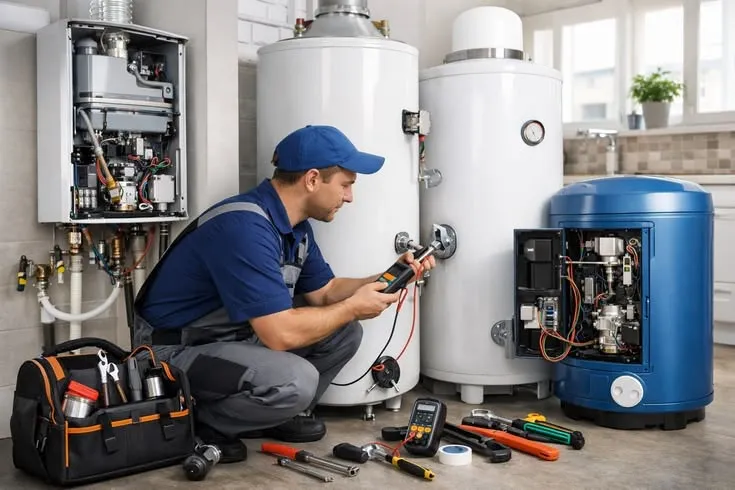
The only time you will know you have a hot water system is when there are issues. Perhaps the water is still cool at the end of the shower, or the temperature fluctuates or a puddle forms around the unit. These signs can give homeowners the feeling that they are in the dark and don’t know what to do. Knowing the symptoms, condition of the system and urgency of repair can make it easier to book a repair.
Pay Attention to the First Signs
The first step is to identify what has changed, in reality. If you completely lose hot water, the problem could be with the heating, electrical, thermostat or system. Warm water that does not get to the typical temperature may be due to another reason.
In addition to the unusual sounds, they can give valuable information. Any clicking, banging or sounds that are not familiar to the system’s user may mean it’s in need of some attention. If the system continues to generate hot water, but performance changes suddenly, it should be investigated.
You do not need to identify the exact fault yourself. Simply recording what you have noticed can give the plumber useful information when assessing the system.
Check for Visible Water Leaks
Water around a hot water unit should not be ignored. The amount of water and where it appears can help indicate how quickly the problem needs attention.
Small, regular losses might need to be evaluated, and if water loss is continuous or increasing will need a more immediate response. If left unchecked, water can get into surrounding flooring, walls, cupboards or other spaces, causing further issues.
If a significant leak develops, an Emergency leaking hot water service may be appropriate. Where it is safe to do so, homeowners can turn off the relevant water supply while waiting for professional help. Avoid taking apart the system, particularly when electrical or gas components are involved.
Consider the System’s Age
A hot water system’s age can be of benefit in making repair decisions. Older systems may be worn out and require a more comprehensive replacement, whereas newer systems may need to be cleaned only for one individual component.
Consider the duration of the unit’s installation, and whether it has had to be fixed in the past. Common issues may indicate a need for a more comprehensive, or comprehensive evaluation of the system, rather than a quick, one-off solution.
But it does not depend on age whether it’s necessary to replace it or not. Everything matters, from the actual fault to the overall condition, previous maintenance and the household needs.
Understand What Needs Repair
Before agreeing to a repair, ask what has been found and what the proposed work is intended to fix. A straightforward explanation can help you understand whether the issue appears isolated or whether other components also need attention.
For people searching for Hot water repairs Wellington Point, this distinction is especially useful because hot water systems can develop very different faults. A qualified professional may inspect relevant connections, controls, valves, heating components, and other parts before recommending the next step.
It is perfectly reasonable to ask whether the repair is expected to restore normal operation or whether there are signs of wider deterioration. Having that conversation helps homeowners make decisions based on the condition of their particular system.
Decide Between Repair and Replacement
Repairing a faulty system can often be sensible, but replacement may also become worth considering in certain circumstances. There is no single answer that works for every household.
Consider the system’s age, the nature of the fault, previous repair history, household hot water demand, and the condition of the equipment as a whole. A system with one repairable fault is a different situation from one that has experienced repeated problems.
Capacity matters too. If the existing unit regularly struggles to meet household demand, simply repairing the current fault may not address the larger issue.
Prepare Before the Plumber Arrives
Some minor information can enhance the assessment. If possible, specify the system type, estimated installation date, date when the problem was first observed and whether its performance worsened abruptly or gradually.
Talk about anything that is out of the ordinary that you have seen, heard, smelt, tasted or felt. If the leak or problem changes before the appointment, it may also help to have photos of the leak or affected area that will give some context.
Do not alternate between controls or make new repairs. A professional will be able to safely check the equipment and identify what needs to be done.
Conclusion
An entire system may not need replacing if it has a hot water issue. By learning the signs and symptoms, checking for leaks, evaluating the equipment’s condition and receiving proper evaluation, homeowners can make an informed decision. It also aids in treating major leaks or failures in a timely manner, rather than letting the situation go out of hand. If you are a local homeowner seeking professional help, dkplumbing.com.au will be the starting point to arrange plumbing assistance and discuss the suitable solution to address hot water issues.