
Termites and bed bugs are among the more difficult pest problems to manage because much of their activity happens out of sight. Termites may travel through concealed areas and damage timber before obvious signs appear, while bed bugs can remain hidden around beds, furniture and narrow gaps close to where people sleep.
For anyone looking for pest control in Singapore, accurate identification should come before treatment. A professional assessment helps establish which pest is present, where activity is concentrated, how far the infestation may have spread and which treatment method is appropriate for the property.
Singapore’s warm and humid environment means pest activity is not confined to a short season. Residential apartments, landed homes, hotels and commercial premises can encounter infestations throughout the year when pests have suitable shelter, food or hosts and favourable hiding places.
Termites and bed bugs nevertheless require completely different treatment strategies. Termite management focuses on colony behaviour, concealed access routes, timber and building conditions, while bed bug control centres on sleeping areas, furniture, harbourage points and preventing insects from spreading through belongings.
Understanding those differences can help property owners avoid ineffective treatments, compare pest-control providers more meaningfully and recognise when professional intervention is warranted.
Why Are Termites and Bed Bugs So Difficult to Control?
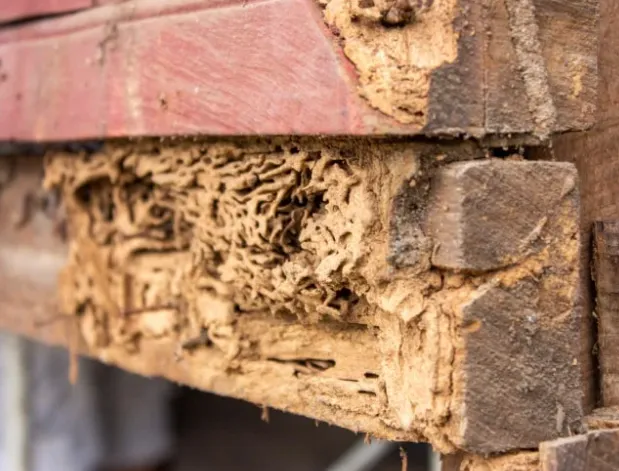
Termites and bed bugs have little in common biologically, but both can be underestimated because the insects people see may represent only a small part of the infestation.
Subterranean termites can move between soil, concealed areas and sources of cellulose without remaining exposed for long periods. Timber may therefore be affected before occupants notice obvious activity. A damaged door frame, built-in cabinet or skirting board may represent only one feeding location rather than the full extent of an infestation.
Bed bugs behave very differently. They tend to remain close to places where people sleep or rest and can hide in mattress seams, bed frames, headboards, furniture joints, cracks and other narrow spaces. Singapore’s National Environment Agency notes that bed bugs favour locations where they can hide and feed regularly, including sleeping areas, mattress-related areas, night tables and other protected spaces.
The result is similar for both pests: treating only what is immediately visible can create a false sense of progress.
Spraying termites found on damaged timber does not establish where the wider infestation is operating. Similarly, treating only a mattress may leave bed bugs concealed inside the bed frame or surrounding furniture.
Professional pest management should therefore begin by understanding how and where the infestation is operating before deciding how it should be treated. This approach is also consistent with Singapore’s newer integrated pest-management direction, which emphasises identifying root causes, using risk-based assessments and selecting appropriate combinations of control methods rather than relying solely on chemical application.
What Are the Early Signs of Termites in Singapore Homes?
Possible early signs of termite activity include mud tubes, weakened or hollow-sounding timber, discarded wings and unexplained deterioration around wooden fixtures. These signs should be treated as clues rather than proof of where the entire infestation is located.
Mud tubes are commonly associated with subterranean termite activity. They provide protected routes between the termites’ environment and potential food sources and may appear around walls, structural joints, foundations or other surfaces.
Timber deterioration is another warning sign. Affected wood can sometimes become weakened or sound hollow when tapped, although damaged timber alone does not confirm whether active termites are still present.
Discarded wings can also indicate that reproductive termites have been active nearby. After swarming, these insects shed their wings, which may be found around windows, doors or other emergence points.
Property owners may also notice unexplained deterioration around door frames, skirting boards, cabinetry or other timber features.
None of these signs identifies the colony or determines the extent of activity by itself. A termite assessment should therefore consider where signs have appeared, what other areas could be affected, how termites may be entering the structure and whether surrounding property conditions are contributing to the problem.
Why Isn’t Spraying Visible Termites Usually Enough?
The termites visible on a piece of damaged timber can represent only a fraction of the activity associated with an infestation.
Workers forage away from the main colony and travel between food sources. Killing the termites that happen to be exposed therefore does not necessarily affect the insects operating elsewhere.
Surface applications may reduce visible activity at one location while leaving the underlying problem largely unchanged.
Professional termite management instead considers the nature of the infestation, the property and potential access routes before selecting a treatment. Depending on the findings, options may include baiting, soil-applied treatment, targeted treatment, monitoring or a combination of approaches.
The US Environmental Protection Agency similarly identifies termite baiting and soil-applied barrier treatments among established termite-management approaches and notes that professional training is important because termite treatments must be applied correctly to be effective and safe.
The important question is therefore not which treatment sounds strongest. It is which method is appropriate for the termite activity and building conditions actually found at the property.
How Does Termite Baiting Work?
Termite baiting works by allowing foraging termites to encounter and feed on bait containing an active ingredient that acts gradually. Because termites interact with other members of the colony through their normal feeding and social behaviour, the treatment is designed to affect more than the individual insects encountered at the bait station.
This makes baiting fundamentally different from spraying exposed termites with a contact insecticide.
Baiting also requires monitoring.
Technicians may inspect stations periodically to assess whether termites have discovered the bait, whether feeding continues and how activity changes over time. The US EPA describes termite bait systems as using cellulose material combined with slow-acting active ingredients, which helps explain why the process is not intended to produce an instant visual result.
For property owners, this means a baiting programme should not be judged solely by what happens immediately after installation.
Seeing fewer termites for several days does not prove that the infestation has ended, just as not seeing an immediate reduction does not necessarily mean the programme is failing.
Where baiting is recommended, ask how the system will be monitored, how often it will be checked and what evidence will be used to determine whether treatment is progressing as expected.
Is Termite Baiting Better Than Soil Treatment?
Neither termite baiting nor soil treatment is universally better. They work differently, and the more appropriate method depends on factors such as termite activity, building construction, access and surrounding property conditions.
Soil treatment generally aims to create a treated zone in areas through which subterranean termites might otherwise travel between the soil and a building.
The suitability of this approach depends heavily on the property. A landed home with direct interaction between soil and structural elements presents different considerations from an apartment located several floors above ground.
Baiting follows a different strategy by taking advantage of termite foraging behaviour and typically involves ongoing monitoring.
This is why soil treatment should not automatically be viewed as an upgrade over baiting, or vice versa. Both are tools within termite management.
The professional judgement lies in determining which approach, or combination of approaches, best matches the infestation and the structure being treated.
Can Technology Help Detect Hidden Termite Activity?
Inspection technology can help provide additional information when suspected termite activity is concealed, but technology should support professional judgement rather than replace it.
Visual inspection remains important because technicians need to interpret physical evidence, building conditions and possible access routes.
Some pest-management providers use additional inspection tools when activity may be hidden behind finished surfaces. Aardwolf Pestkare, for example, uses thermal imaging in selected termite assessments where the circumstances make it useful.
Thermal imaging can help identify unusual patterns behind surfaces that may deserve closer investigation, but the image itself does not diagnose an infestation.
Its value depends on how the findings are interpreted alongside physical termite evidence and knowledge of termite behaviour.
This distinction matters when comparing pest-control providers. More sophisticated equipment does not automatically produce better pest control. The important question is whether the provider can translate inspection findings into an appropriate treatment decision.
What Are the Signs of a Bed Bug Infestation?
Bed bug infestations are better identified through physical evidence than through bites alone.
Unexplained bites are often what first raises suspicion, but bites cannot reliably confirm bed bugs because different insects and skin reactions can produce similar symptoms.
Physical inspection provides more useful evidence.
Bed bugs may be found around mattress seams, headboards, bed frames and furniture close to sleeping areas. Other possible signs include live insects, shed skins and characteristic spotting or staining.
NEA advises that bed bug detection can involve visual inspection of furniture and the use of surveillance traps. Its guidance also identifies several common hiding locations around sleeping environments and recommends professional pest management where premises are infested.
The inspection should extend beyond the mattress.
Bedside tables, upholstered furniture, skirting boards, cracks and other protected spaces close to where people rest can all provide harbourage.
Focusing exclusively on the mattress risks overlooking other parts of the infestation.
How Do Bed Bugs Spread?
Bed bugs are effective hitchhikers and can be transported between locations in luggage, bags, clothing, furniture and other belongings.
An infestation is therefore not evidence that a home or hotel is dirty.
Travel is one common way bed bugs can be introduced into a home, hotel or other accommodation environment. Second-hand mattresses, beds and upholstered furniture can also present a potential route if affected items are moved without being properly inspected.
Once introduced, bed bugs generally remain near locations where people spend extended periods sleeping or resting, although larger infestations can extend into surrounding furniture and spaces.
This behaviour has important implications when an infestation is suspected.
Moving furniture, clothing or luggage from one bedroom to another can potentially carry insects with them. Throwing away a mattress immediately may also fail to solve the problem if bed bugs are already hiding elsewhere.
Before emptying a room or relocating furniture, it is generally more useful to establish where activity is occurring and follow the preparation instructions associated with the proposed treatment.
Why Can Bed Bug Treatment Require Follow-Up?
Bed bug treatment can require follow-up because the insects hide in numerous small and difficult-to-access locations, and the extent of an infestation can vary considerably from one property to another.
A recently introduced infestation confined to a limited sleeping area is not equivalent to an established problem involving several rooms and pieces of furniture.
Treatment may reach a large proportion of the active population while some insects remain in less accessible harbourage. The condition of the infestation may also change after the first treatment.
NEA notes that bed bug management may involve a combination of chemical and non-chemical approaches, including vacuuming, hot laundering, steam or heat treatment, harbourage reduction and insecticide treatment.
Follow-up assessment can therefore help determine whether activity remains and whether additional intervention is necessary.
Rather than selecting a provider solely because it promises to eliminate bed bugs in a fixed number of visits, look for a clear process explaining how treatment success will be assessed.
Termites vs Bed Bugs: What Is the Main Difference in Treatment?
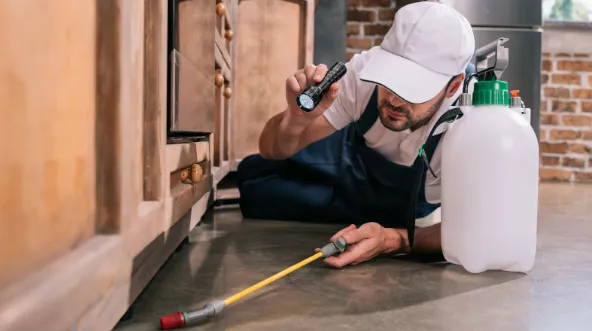
Termites and bed bugs require completely different pest-management strategies because the pests behave differently and occupy different environments.
Termite control focuses heavily on colony behaviour, concealed movement, structural access, timber and, particularly for subterranean termites, the relationship between the building and surrounding soil.
Bed bug management focuses on sleeping areas, furniture, narrow harbourage points and the movement of belongings that can transport insects between locations.
Using the same generic spraying approach for both problems ignores these differences.
For termites, the central challenge is determining where activity is occurring and how termites are gaining access to the property. For bed bugs, the challenge is identifying hiding places, establishing how widely the insects have spread and treating affected areas without inadvertently moving the infestation elsewhere.
Accurate diagnosis therefore matters more than selecting a treatment based simply on price, product branding or perceived chemical strength.
How Do HDB Flats and Condominiums Affect Pest Treatment?
High-rise residential properties create different pest-management considerations from landed homes.
For suspected bed bugs in an HDB flat or condominium, an inspection should consider the affected bedroom, surrounding furniture and nearby spaces rather than examining the mattress alone.
Where there is credible evidence that pest activity extends beyond an individual unit, residents may also need to raise the issue with the managing agent or other relevant property-management party so common or adjoining areas can be considered.
Termite assessment in apartments follows a different path.
Visible deterioration around built-in carpentry or timber features does not automatically confirm termite activity. A technician needs to determine whether the damage is pest-related and, if so, what type of termite activity is present.
Built-in cabinetry, wall finishes and furniture can also restrict access to areas requiring inspection.
A systematic assessment is particularly useful in these situations because treatment should not be based entirely on the location where damage first becomes visible.
Why Do Landed Homes Need a Wider Termite Assessment?
Landed properties generally create more interaction between the building, surrounding soil, landscaping and external structures, which can make termite assessment more extensive.
Gardens, soil around the property, exterior walls, drains, storage spaces, timber features and areas of direct ground contact can all become relevant during an inspection.
Inside the property, door frames, skirting boards, cabinets and other cellulose-containing materials may provide additional evidence.
A useful termite inspection therefore considers the home as a system rather than treating one damaged piece of timber in isolation.
Treatment options can also differ because access to surrounding soil may make certain approaches more practical than they would be in a high-rise apartment.
Where signs of termite activity are discovered, early assessment can help establish whether the issue appears localised or whether additional parts of the property deserve investigation.
Why Are Bed Bugs a Particular Concern for Hotels?
Hotels, serviced apartments, hostels and other accommodation businesses face a particular bed bug challenge because guests and luggage move continuously between rooms and locations.
An insect introduced by one guest can remain concealed until another occupant reports bites or housekeeping staff discover physical signs.
Early recognition therefore matters.
Housekeeping employees who understand what bed bug evidence looks like are better positioned to flag suspicious activity for assessment instead of waiting for multiple complaints.
Where an infestation is confirmed, treatment decisions should consider not only the affected room but also whether nearby areas warrant inspection.
Documentation can also be valuable. Recording where activity was detected, when treatment occurred and what was found during subsequent checks creates a clearer history if similar activity appears again.
What Determines Termite and Bed Bug Treatment Costs in Singapore?
Termite and bed bug treatment costs in Singapore depend mainly on the extent of the infestation, property type, accessibility, treatment method and the amount of follow-up or monitoring required.
There is therefore no meaningful single price that applies to every termite or bed bug problem.
For termite work, costs may be influenced by property size, termite species, location and extent of activity, treatment method, accessibility and whether monitoring forms part of the programme.
For bed bugs, the scope may depend on the number of affected rooms, amount of furniture, extent of harbourage, selected treatment method and number of visits considered necessary.
Accessibility can substantially change the workload for either pest. Built-in furniture, concealed structural areas and infestations affecting multiple locations normally require more inspection and treatment effort than straightforward, localised activity.
This is why headline pricing tells only part of the story.
When comparing quotations, establish what the proposed price actually covers, including the inspection, treatment areas, method, expected follow-up, monitoring and any applicable warranty.
Two companies quoting different prices may simply be proposing very different treatment programmes.
Why Should a Pest-Control Quote Follow the Inspection?
An inspection provides the information needed to recommend treatment. Without it, a quotation for a complex termite or bed bug problem can become little more than an assumption.
For termites, the technician should be looking for evidence of activity, affected materials, possible access routes and relevant building conditions.
For bed bugs, the priority is confirming the pest and identifying where insects appear to be harbouring around sleeping and resting areas.
A useful assessment does not need to be unnecessarily complicated, but it should establish what pest is involved, where signs have been found, how extensive the problem appears to be and what factors may be supporting it.
The treatment recommendation then becomes easier to evaluate.
Property owners can ask why a particular method has been selected, which areas will be treated, whether further visits may be needed and how treatment progress will be assessed.
How Do You Choose a Pest Control Provider in Singapore?
A reliable pest control provider should be able to explain what has been found, why a particular treatment is being recommended, what preparation is required and how follow-up will be handled.
Credentials are an important starting point.
For vector-control work regulated in Singapore, NEA states that only registered Vector Control Operators can be engaged to undertake the relevant work and that employees conducting vector-control work must hold the appropriate technician licences or worker certifications.
Experience with the pest itself is equally important.
Termite work requires an understanding of termite behaviour, building conditions and appropriate treatment methods. Bed bug management calls for careful inspection and knowledge of harbourage behaviour and potential spread.
The provider should be able to connect its recommendation to what was actually observed rather than immediately offering the same standard package to every customer.
For programmes requiring monitoring, the expected process should be clear. Where a warranty applies, customers should also understand what is covered and what circumstances fall outside the agreement.
Aardwolf Pestkare provides termite and bed bug pest-management services across residential and commercial settings in Singapore. NEA’s published information on bed bug management has also listed Aardwolf among companies providing pest-management services for bed bugs.
As with any provider, however, the most useful comparison is not simply the company name or headline price. It is whether the proposed treatment reflects the inspection findings and provides a clear process for follow-up.
What Are the Red Flags When Choosing a Pest Control Company?
One warning sign is a provider that recommends an extensive treatment before establishing what pest is actually present or where the activity is occurring.
A quotation provided before any meaningful assessment is not automatically unreliable, particularly when indicative pricing is clearly labelled. However, complex termite or bed bug infestations should eventually lead to recommendations based on the actual property rather than assumptions.
Be cautious as well when a provider promises permanent eradication within a fixed number of visits regardless of infestation severity, property conditions or pest behaviour. Some pest problems can be resolved quickly, while others require monitoring or further treatment.
Another warning sign is an inability to explain why a particular treatment has been selected. A customer should be able to understand why baiting, soil treatment, heat, targeted insecticide treatment or another approach is suitable for the infestation.
Safety communication also matters. Providers should be able to explain any preparation, re-entry, ventilation or cleaning requirements relevant to the treatment being performed.
Finally, vague warranty language deserves closer examination. A strong guarantee is not simply a large promise in an advertisement. It should clearly state what the provider will do if activity returns and under what circumstances additional treatment is included.
What Should a Pest Control Warranty Actually Cover?
A useful pest control warranty should explain what happens if pest activity returns during the coverage period.
Not every warranty covers the same circumstances.
A termite programme may have monitoring requirements that differ considerably from the conditions attached to a bed bug treatment. Even within the same pest category, coverage may vary according to the method used and the property.
Before proceeding, establish whether another inspection is included if activity returns, whether re-treatment is covered, how long the warranty lasts and what conditions must be followed for coverage to remain valid.
Preparation and prevention can influence those terms.
Bed bug treatment, for example, may depend on belongings being handled according to specific instructions, while a termite baiting programme may require scheduled monitoring.
The valuable part of a warranty is not the word “warranty” itself. It is the clarity of the provider’s answer when asked what happens if pest activity persists.
Is Pest Control Safe Around Children and Pets?
Pest control can be carried out in homes with children and pets when the appropriate product, application method and safety precautions are followed, but the requirements differ according to the treatment being performed.
There is no universal preparation or re-entry instruction suitable for every pest-control service.
Households with children, elderly residents, pets or other specific concerns should tell the provider before treatment starts.
Depending on the treatment and application area, food, children’s items, pet bowls, toys and personal belongings may need to be protected or moved temporarily.
Re-entry, ventilation and cleaning instructions should also be followed according to the technician’s directions and product requirements.
Descriptions such as “low toxicity” or “eco-friendly” should not be interpreted as permission to ignore normal precautions. Pest-control products should still be used according to their approved purpose and safety instructions.
How Can You Reduce Termite Risk After Treatment?
Termite treatment is only one part of longer-term management.
Property conditions continue to matter after treatment.
Leaks and persistent moisture should be addressed where practical, and unexplained deterioration of timber should not simply be painted over or concealed without understanding the cause.
For landed homes, external conditions may also deserve attention because the building, landscaping and soil are more closely connected.
Where a monitoring or baiting programme has been installed, checks should continue according to the treatment plan.
The disappearance of visible termite activity does not necessarily provide enough evidence to determine that monitoring can stop, particularly when the selected treatment is designed to work over time.
How Can You Reduce the Risk of Bed Bugs Spreading?
Bed bug prevention and containment depend heavily on how potentially affected belongings are handled.
After travel, luggage and belongings can be checked before being stored near sleeping areas when there is reason to suspect possible exposure.
Second-hand mattresses, bed frames and upholstered furniture also deserve inspection before being brought into a home.
When bed bugs are already suspected, avoid unnecessarily moving furniture, bags or clothing between rooms because potentially affected items can spread insects to areas that were previously unaffected.
Throwing away a mattress immediately is not always the answer. Bed bugs may also be hiding in the bed frame, furniture or surrounding spaces.
The priority should be to determine how far the infestation extends and follow preparation instructions appropriate to the chosen treatment.
When Does DIY Pest Control Stop Being Practical?
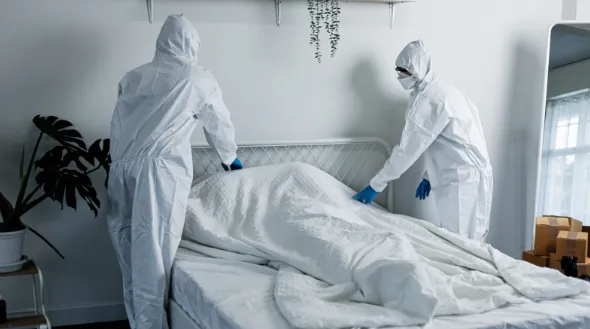
DIY treatment becomes less practical when pest activity repeatedly returns, appears in multiple locations or involves termites or established bed bug infestations that can remain concealed.
Not every household insect sighting requires professional treatment. Simple, isolated problems can sometimes be addressed through sanitation, removing pest resources and correctly using appropriate household products.
Termites and established bed bugs are different because much of their activity can remain hidden.
Spraying exposed termites may kill individual workers without revealing what is happening elsewhere. Treating only a mattress for bed bugs can overlook insects concealed in furniture, bed frames or surrounding areas.
Repeated DIY treatment can therefore create short-term visible improvement without resolving the larger infestation.
Professional assessment becomes increasingly worthwhile when the pest cannot be confidently identified, signs continue after treatment or activity appears in multiple locations.
The objective is not simply to find a stronger pesticide. It is to understand where the pest is living, how it is behaving and which intervention is realistically capable of reaching the areas that matter.
Choosing the Right Treatment for the Property
There is no single best treatment for every termite or bed bug infestation.
For subterranean termites, baiting may be appropriate in one property while soil treatment or another targeted approach may make more sense elsewhere.
For bed bugs, treatment scope depends on where insects have established themselves and how extensively activity has spread through rooms, furniture and surrounding spaces.
This is why inspection should drive the recommendation rather than the treatment package determining what the technician looks for.
The provider should be able to connect what was observed at the property with the treatment being proposed.
Property owners should, in turn, understand what preparation is expected, how treatment progress will be evaluated and what follow-up may be required.
That makes it easier to determine whether the proposed pest-control programme has genuinely been tailored to the infestation.
The Takeaway
Termites and bed bugs are difficult to manage largely because significant activity can remain in places occupants rarely see.
Effective pest control starts with identifying the pest and understanding how the infestation is operating inside the property.
For termites, that may involve investigating concealed activity, structural access, soil conditions and affected timber before determining whether baiting, soil treatment or another approach is appropriate.
For bed bugs, it means looking beyond the mattress to furniture, cracks and surrounding spaces while taking care not to spread potentially affected belongings.
For homeowners and businesses considering professional pest control in Singapore, Aardwolf Pestkare provides termite and bed bug assessment and treatment as part of its pest-management services. As with any provider, treatment scope, preparation requirements, follow-up arrangements and applicable warranty conditions should be confirmed for the individual property before proceeding.
The most useful question is ultimately not how quickly the pests visible today can be killed. It is whether the treatment addresses the infestation that remains out of sight.
Frequently Asked Questions
How Do I Know if I Have Termites in My Singapore Home?
Possible termite signs include mud tubes, damaged or hollow-sounding timber, discarded wings and unexplained deterioration around wooden structures. These signs justify closer investigation but do not necessarily reveal where the infestation is operating or how extensive it is. A professional assessment can help determine whether active termite activity is present and which parts of the property require closer inspection.
How Long Does Termite Treatment Take?
There is no single termite-treatment timeline because the process depends on the treatment method, termite activity and property conditions. Some targeted work may be completed during a service visit, while baiting programmes require monitoring over time. Where baiting is used, the provider should explain how frequently the system will be checked and what evidence will be used to evaluate progress.
Can Bed Bugs Be Eliminated in One Treatment?
Some bed bug infestations may be easier to control than others, so one number of visits cannot reliably apply to every property. The extent of activity, available harbourage, furnishings and treatment method all influence the process. Follow-up assessment is useful for determining whether activity remains after the initial treatment.
Do I Need to Throw Away My Mattress if I Find Bed Bugs?
Not automatically. Bed bugs can shelter in bed frames, furniture, skirting boards and other nearby areas as well as mattresses. Removing a mattress without assessing the rest of the room may therefore fail to solve the infestation and could potentially spread insects if the item is moved carelessly.
Is Termite Baiting Better Than Soil Treatment?
Neither method is universally better. Baiting and soil treatment work differently, and suitability depends on termite activity, building construction, accessibility and property conditions. The treatment should be selected after assessing the individual infestation rather than assuming one approach is always superior.
Can Bed Bugs Spread Between Rooms?
Yes. Bed bugs can move over short distances themselves and may also be transported in furniture, luggage, clothing and other belongings. Moving potentially affected items from one room to another can therefore contribute to the spread of an infestation.
Is Pest Control Safe Around Children and Pets?
Professional pest control can be performed in homes with children and pets when appropriate precautions are followed. Safety requirements vary depending on the product and treatment method, so inform the provider about children and animals beforehand and follow the specific preparation, re-entry, cleaning and ventilation instructions provided.
How Do I Check Whether a Pest Control Company Is Properly Registered in Singapore?
For vector-control work covered by Singapore’s regulatory framework, customers can check whether the company is registered with the National Environment Agency as a Vector Control Operator. NEA states that relevant vector-control work must be undertaken by registered operators using appropriately licensed or certified personnel.
When Should I Call a Professional Pest Control Company?
Professional assessment is worth considering when termite activity is suspected, bed bugs repeatedly appear, pest activity affects multiple areas or DIY treatment fails to resolve the problem. The earlier the pest and extent of activity are accurately identified, the easier it becomes to select treatment based on the actual infestation instead of guesswork.