
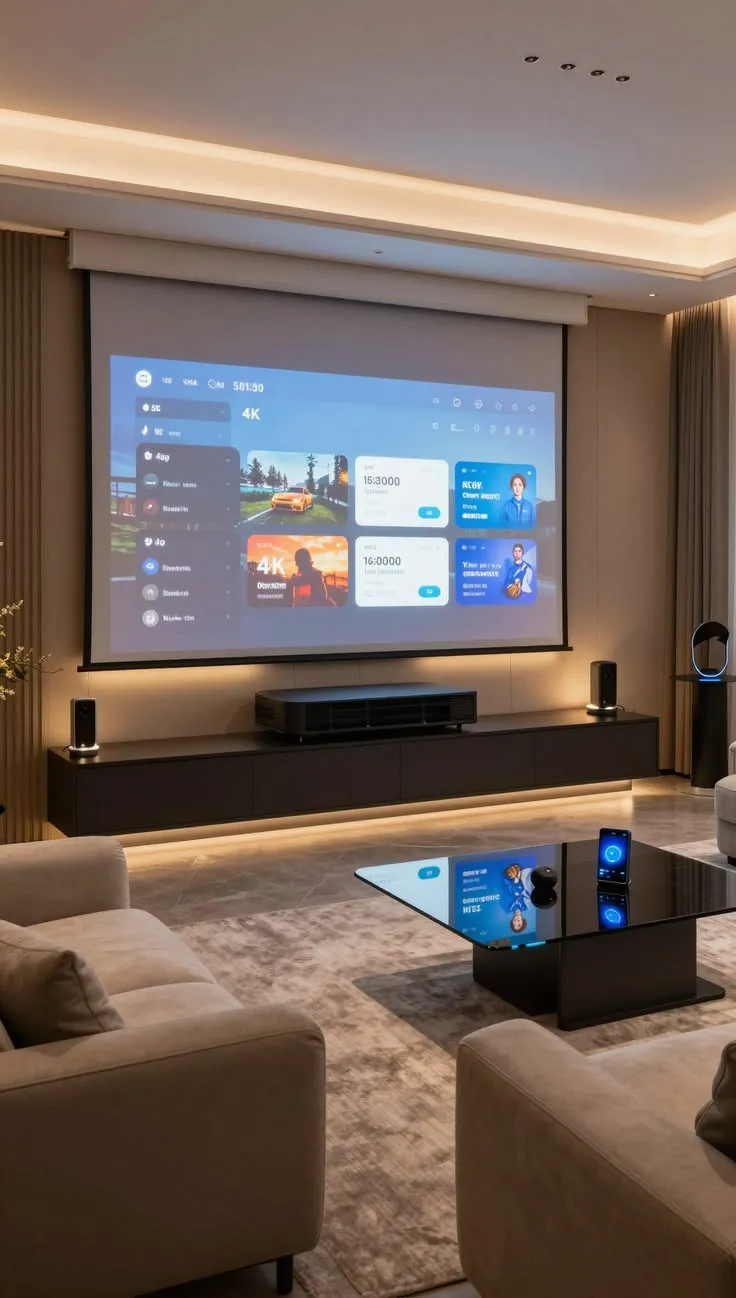
Choosing between a projector and a large-screen television can shape the entire home entertainment experience. Both technologies offer impressive picture quality, but they perform differently depending on room lighting, seating distance, screen size, and everyday viewing habits.
A projector may create a more traditional cinematic atmosphere, while a television often provides greater convenience in shared living spaces. Understanding these differences before purchasing equipment helps homeowners avoid costly compromises and select a display that suits the room rather than simply following the latest trend.
Start With the Room Instead of the Screen
The physical environment should guide the display decision. Room dimensions, window placement, ceiling height, and seating arrangements determine which options are practical. During home theater installation NJ projects, evaluating these conditions before selecting equipment can help prevent installation problems.
A projector needs suitable image placement, mounting clearance, and control over surrounding light. A television generally requires less installation space but still needs appropriate wall support and viewing distance. Neither option is automatically superior. The best choice depends on how the room will function throughout the day.
Compare Performance in Bright and Dark Rooms
Ambient lighting is one of the most important differences between projectors and televisions. Modern televisions can deliver high brightness levels, making many models suitable for daytime viewing. However, reflections from nearby windows may remain distracting. Projectors typically perform best when surrounding light is carefully controlled. Excessive illumination can reduce perceived contrast and make dark movie scenes appear washed out.
This does not mean every projector requires complete darkness. Performance depends on projector brightness, screen characteristics, and room conditions. Homeowners should evaluate displays under lighting conditions similar to those they experience during normal entertainment activities.
Consider How Movies Will Be Played
Display selection should also account for the equipment delivering the movie signal. A Kaleidescape movie player can provide high-quality downloaded movie playback through compatible televisions or projectors. However, supported video formats and resolutions depend on the particular player model.
The display must also support the intended output format to reproduce its benefits. For example, Dolby Vision compatibility should be verified across the playback chain rather than assumed from a projector’s 4K resolution alone. Matching the player, display, and audio equipment helps homeowners make better use of their investment.
Evaluate Screen Size and Viewing Distance
A larger image can create a stronger sense of immersion, but screen size should remain proportionate to the room. Sitting too close to an oversized display may make prolonged viewing uncomfortable. Sitting too far away can reduce the visibility of fine details. Projectors offer considerable flexibility for creating large images, provided the room has suitable projection distance and screen space.
Large televisions provide more predictable image placement but become increasingly difficult to transport and mount as dimensions increase. Homeowners should test comfortable viewing positions before committing to a particular screen size or redesigning the seating arrangement.
Understand Installation and Maintenance Requirements
Display ownership involves more than the initial purchase price. Televisions usually require suitable mounting hardware, power access, and cable connections. Projectors may need ceiling mounts, dedicated screens, and additional wiring. Maintenance requirements also differ between models and technologies.
When comparing options, consider:
-
Mounting locations and structural support.
-
Access for cleaning and servicing.
-
Required HDMI and network connections.
-
Ventilation and manufacturer clearances.
-
Screen installation and alignment requirements.
-
Expected maintenance and replacement expenses.
A complete installation estimate provides a more realistic comparison than display prices alone.
Think About Gaming, Sports, and Everyday Television
Not every entertainment room is dedicated exclusively to movies.
Households that regularly watch sports, play video games, or leave the television running during daytime activities may prioritize brightness, responsive controls, and convenience. Gaming performance depends on specific display features such as input lag, refresh rate, and supported connection standards. Movie enthusiasts may place greater importance on image size, contrast, and an immersive viewing environment.
Some homeowners may consider dual-display arrangements, although these increase installation complexity and cost. Identifying the activities that receive the most attention helps determine whether a projector or television offers greater practical value.
Make the Final Decision Through Real Demonstrations
Specifications provide useful comparisons, but personal viewing tests remain valuable. Whenever possible, compare displays using familiar content at similar viewing distances and appropriate picture settings. Pay attention to shadow detail, motion handling, reflections, and viewing comfort. Remember that showroom lighting may differ substantially from the intended installation space.
Homeowners should also evaluate remote controls, input switching, and everyday operating convenience. A display that performs impressively during a short demonstration may not suit the household’s normal routines. The final decision should reflect realistic conditions rather than promotional claims.
Conclusion
Projectors and large-screen televisions serve different entertainment priorities, and both can deliver satisfying results when properly selected. Room lighting, viewing distance, installation requirements, and daily activities should guide the choice more than screen size alone. Epic Systems provides home theater equipment and installation services that homeowners can consider when evaluating these alternatives. Ultimately, the right display is the one that performs consistently in the intended environment and makes favorite entertainment enjoyable without unnecessary adjustments or compromises.