
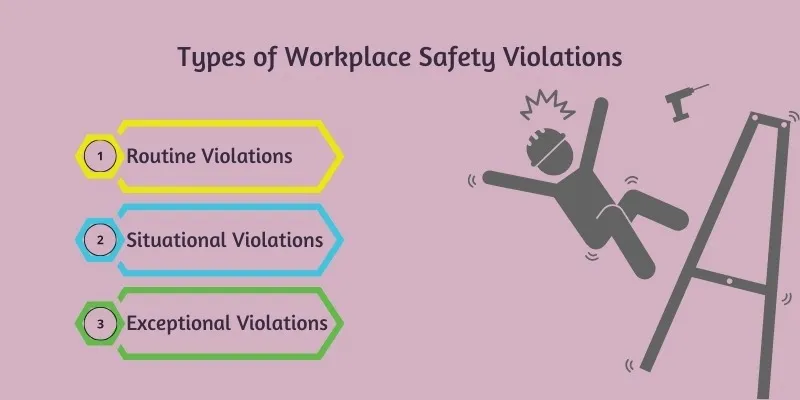
OSHA violations carry real financial exposure, and the agency treats construction as a priority enforcement area for good reason — it accounts for a disproportionate share of workplace fatalities nationwide. Taking safety seriously isn’t just a compliance posture; it’s also your best defense if an inspector does show up.
But not every safety issue results in a citation, and not every citation is correctly issued. Knowing how OSHA classifies violations, how penalties are actually calculated, and what defenses are genuinely available changes how you respond when an inspector arrives.
OSHA Overview and Authority
The Occupational Safety and Health Administration enforces workplace safety standards under the Occupational Safety and Health Act, and its authority rests heavily on the General Duty Clause — a catch-all requiring employers to keep the workplace free of recognized hazards likely to cause death or serious harm, even where no specific standard directly addresses the hazard. OSHA can inspect construction sites, issue citations, and impose fines, and construction draws disproportionate attention because falls, electrocution, being struck by objects, and being caught in or between equipment — OSHA’s “Fatal Four” — account for the majority of construction worker deaths each year.
Common Construction Safety Violations
Fall protection violations are consistently the most frequently cited standard in construction, since falls are the leading cause of construction deaths. OSHA generally requires fall protection above six feet in most construction work — guardrails, safety nets, or personal fall arrest systems are all acceptable, but only if properly installed and used, which is where many citations actually originate.
Scaffold safety requirements cover proper construction, guardrails, and load capacity; scaffold-related citations are typically among the top five most cited standards industry-wide.
Electrical safety violations, particularly around grounding and lockout/tagout procedures, address hazards that can cause fatal electrocution even from what looks like a minor exposed connection.
Hazard communication requires that workers have access to safety data sheets and training on the hazardous chemicals they work around — a frequently cited paperwork and training gap rather than a physical hazard.
Trenching and excavation rules require protective systems — shoring, shielding, or sloping — for trenches deeper than five feet, and OSHA has specifically prioritized trench enforcement in recent years because trench collapses are catastrophic and largely preventable; a trench collapse can bury and kill a worker in seconds, which is part of why these citations are treated with particular seriousness even at the “serious” classification level.
Confined space entry into permit-required spaces requires atmospheric testing and a written entry procedure before anyone goes in — violations here are taken seriously because the hazards (oxygen deficiency, toxic atmosphere) are often invisible until someone is already exposed.
The OSHA Inspection Process
An OSHA compliance officer can generally inspect a site without a warrant, though an employer can request one — doing so rarely helps and can create friction that doesn’t serve the employer’s interests, since OSHA will typically obtain the warrant anyway.
During an inspection, the officer walks the site, documents conditions with photos and measurements, and interviews workers, sometimes privately. Workers can speak with an inspector but aren’t required to, and an employer’s representative generally has the right to accompany the inspector during the walkthrough — exercising that right, and having a designated safety representative present for the entire inspection, is one of the simplest and most effective ways to make sure the record reflects what actually happened rather than an inspector’s impression alone.
Types of OSHA Violations and Current Penalty Amounts
OSHA penalty maximums are adjusted annually for inflation under the Federal Civil Penalties Inflation Adjustment Act; as of early 2026, the amounts below reflect the current schedule, though they’re worth confirming against OSHA’s published table before relying on them for a specific citation.
Serious violations — where the hazard could plausibly cause death or serious physical harm — carry a maximum penalty of $16,550 per violation.
Other-than-serious violations cover hazards unlikely to cause death or serious harm (recordkeeping gaps, minor tripping hazards in low-traffic areas) and can also draw penalties up to $16,550, though these are frequently reduced or waived depending on severity.
Willful violations — where the employer knew about the hazard and either intentionally disregarded it or acted with plain indifference to worker safety — carry a maximum of $165,514 per violation, with no automatic reduction for company size or good faith, and can carry criminal exposure if a willful violation results in a worker’s death.
Repeat violations — a substantially similar hazard cited again within five years of a prior citation — also carry the $165,514 maximum, and repeat citations compound quickly if a company has multiple sites cited for the same underlying hazard.
Failure-to-abate penalties can add up to $16,550 per day for each day a cited hazard remains uncorrected past its abatement deadline, separate from the original citation.
De minimis violations are technical non-compliance with no real employee safety impact — documented, but no fine is issued.
How Penalties Are Actually Calculated
OSHA starts from a gravity-based penalty tied to the severity and probability of the hazard, then applies adjustment factors: employer size (smaller employers can see meaningful reductions, sometimes 10% to 60%), a good-faith reduction for employers with a demonstrably effective safety program, and violation history (a clean record can help; a prior citation for the same hazard triggers the repeat classification instead of a reduction). Because these factors are where most of the real negotiation happens, walking into a citation review with organized training records, a written safety program, and documentation of prompt correction of past hazards is often more valuable than arguing the underlying facts.
Defense Strategies
Infeasibility. Arguing that compliance was genuinely impossible — not merely expensive or inconvenient — is a recognized defense, but it’s narrow and rarely succeeds; you generally need to show compliance was technologically impossible or would have created a greater hazard than the one it was meant to prevent.
Isolated employee misconduct. If a violation stemmed from an employee’s unforeseeable, unauthorized departure from an otherwise adequate and enforced safety program, that can be a complete defense — but it requires real evidence: written policies, documented training, a history of enforcement (including prior discipline for similar violations), and proof the specific conduct was actually contrary to a known, communicated rule. A safety program that exists on paper but isn’t demonstrably enforced won’t support this defense.
Standard doesn’t apply. Sometimes the cited standard simply doesn’t govern the work being performed — a standard written for one type of operation misapplied to a different one is a legitimate and often successful ground for contesting a citation.
Multi-employer worksite defense. On multi-employer sites, OSHA’s enforcement policy can cite a general contractor as a “controlling employer” even for hazards created by a different subcontractor’s crew. Whether that citation holds up often depends on how much actual control the cited employer had over the specific hazard — a fact-intensive defense that benefits enormously from clear contractual delineation of safety responsibility up front. Getting that delineation right in the subcontract itself — before a citation, not after — is one of the more effective ways to limit this exposure; Construction Lawyer’s contract review team regularly builds this kind of safety-responsibility language into subcontracts specifically to head off multi-employer citations.
Appeal Process
You generally have 15 working days from receipt of the citation to file a notice of contest — a hard deadline that, if missed, converts the citation into a final, unappealable order regardless of its merits. A timely contest sends the case to the independent Occupational Safety and Health Review Commission, where you’re entitled to a hearing before an administrative law judge, with the ability to present evidence, cross-examine witnesses, and challenge both the classification and the penalty amount. Many contested citations resolve through an informal settlement conference with the OSHA area office before ever reaching a hearing, and that conference is often where classification and penalty amount get meaningfully negotiated down. If a citation is heading toward a contested hearing, Construction Lawyer’s litigation team represents contractors through the Review Commission process.
Key Takeaways
-
Fall protection, scaffolding, and trenching are the most frequently and seriously cited hazards in construction — they’re where enforcement attention concentrates.
-
Willful and repeat violations carry penalties roughly ten times higher than serious violations, with no automatic reduction for good faith or company size.
-
The isolated-misconduct defense requires a demonstrably enforced safety program, not just a written policy that exists on paper.
-
On multi-employer sites, clear contractual allocation of safety responsibility matters before a citation is issued, not just after.
-
The 15-day notice-of-contest deadline is absolute — missing it converts the citation into a final order regardless of merit.
Facing an OSHA citation? Our law firm defends contractors against OSHA citations, works to reduce penalties, and represents you through the informal conference and appeal process. Contact us for a free consultation about your OSHA violation.