When it comes to installing a privacy fence, homeowners often find themselves torn between two popular materials: wood and vinyl. Both have their advantages and drawbacks, and the best choice depends on your budget, maintenance preferences, and aesthetic goals. In this guide, we’ll compare wood and vinyl privacy fences to help you decide which one suits your needs.
🔍 Appearance and Customization
Wood Privacy Fence
Wood has a timeless, natural look that blends seamlessly with most landscapes. It can be stained or painted in various colors to match your home’s exterior. Cedar and redwood are popular choices due to their natural resistance to rot and insects, while pressure-treated pine offers a more budget-friendly option.
Wood fences also allow for different styles, such as:
- Solid board (maximum privacy)
- Shadowbox (partial privacy with airflow)
- Lattice-top (decorative touch)
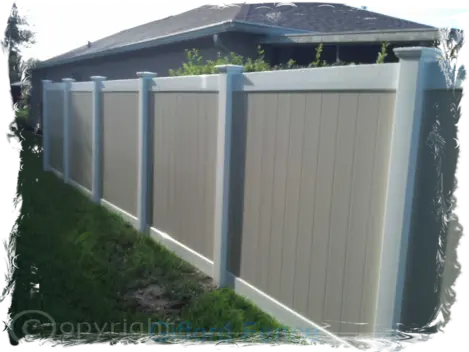
Vinyl Privacy Fence
Vinyl fences come in a range of colors and styles, often mimicking the look of wood grain. While they lack the natural warmth of real wood, they offer a clean, uniform appearance that doesn’t fade or warp over time.
Vinyl privacy fences are available in styles like:
- Solid panel (full privacy)
- Picket-style (semi-private)
- Decorative designs (scalloped or ornamental tops)
Winner? If you love a classic, customizable look, wood wins. If you prefer low-maintenance uniformity, vinyl is better.
💰 Cost Comparison
Wood Privacy Fence
- Initial Cost: $$ (Moderate)
- Pressure-treated pine: $15–$25 per linear foot
- Cedar or redwood: $25–$40 per linear foot
- Long-Term Cost: Higher (due to maintenance)
Vinyl Privacy Fence
- Initial Cost: $$$ (Higher upfront)
- Standard vinyl: $30–$50 per linear foot
- Premium vinyl: $50+ per linear foot
- Long-Term Cost: Lower (minimal upkeep)
Winner? Wood is cheaper upfront, but vinyl saves money over time with less maintenance.
⚙️ Maintenance and Durability
Wood Privacy Fence
- Maintenance: High
- Requires staining or sealing every 2–3 years
- Prone to rot, insect damage, and warping
- May need repairs after severe weather
- Lifespan: 10–20 years (depending on wood type and care)
Vinyl Privacy Fence
- Maintenance: Low
- No painting or sealing needed
- Resistant to rot, insects, and moisture
- Easy to clean (just hose it down)
- Lifespan: 20–30+ years
Winner? Vinyl is the clear winner for durability and low upkeep.
🌿 Environmental Impact
Wood Privacy Fence
- Pros: Biodegradable, renewable resource (if sourced sustainably)
- Cons: Treated wood may contain chemicals; deforestation concerns
Vinyl Privacy Fence
- Pros: Long lifespan reduces waste
- Cons: Made from PVC (non-biodegradable, difficult to recycle)
Winner? Wood is more eco-friendly if sustainably sourced, but vinyl’s longevity can offset waste.
🏡 Installation and Repairs
Wood Privacy Fence
- Installation: Can be DIY-friendly but labor-intensive
- Repairs: Easier to fix individual boards
Vinyl Privacy Fence
- Installation: Often requires professional help due to precise fitting
- Repairs: Damaged panels may need full replacement
Winner? Wood is better for DIYers; vinyl may need professional installation.
🔒 Privacy and Noise Reduction
Both materials provide excellent privacy when built as solid-panel fences. However:
- Wood absorbs sound slightly better due to its density.
- Vinyl can amplify noise if hollow (higher-quality vinyl has foam cores for better insulation).
Winner? Tie—both offer strong privacy, but wood has a slight edge in noise reduction.
✅ Final Verdict: Which Should You Choose?
Choose a Wood Privacy Fence If You…
✔ Want a natural, customizable look
✔ Don’t mind regular maintenance
✔ Prefer a lower upfront cost
✔ Enjoy DIY projects
Choose a Vinyl Privacy Fence If You…
✔ Want a long-lasting, low-maintenance option
✔ Prefer a modern, uniform appearance
✔ Are willing to invest more upfront
✔ Live in a humid or termite-prone area
Final Thought
A privacy fence is a long-term investment, so weigh your priorities carefully. If you love the rustic charm of wood and don’t mind upkeep, it’s a fantastic choice. But if you want a hassle-free, durable solution, vinyl is the way to go.